
Motorcycle Gear
Best Motorcycle Boots: Safest & Comfortable Guide
Mar
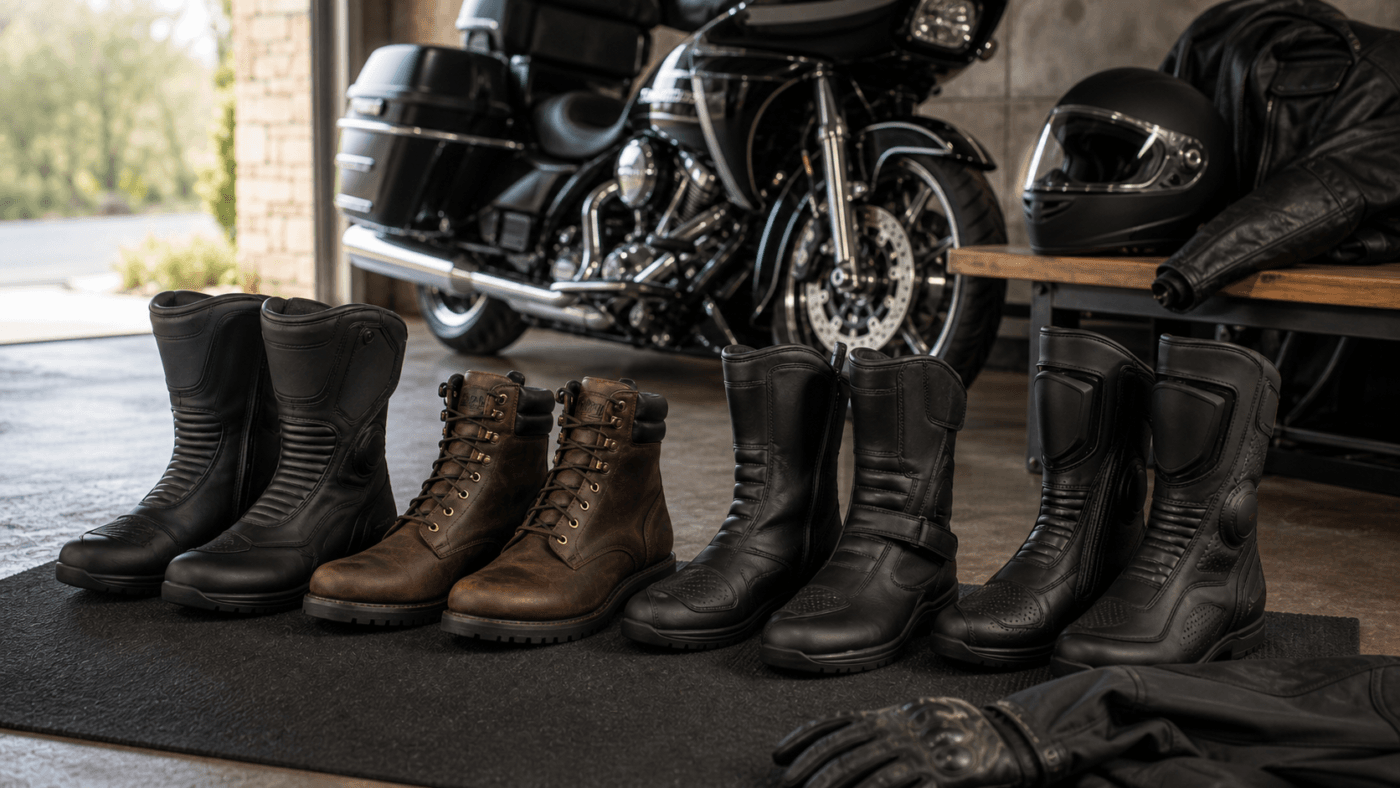
The best motorcycle boots protect your feet and ankles while staying comfortable enough to wear for the whole ride. A good boot is different from a regular leather boot because it is built around motorcycle crash risks: ankle twisting, impact, abrasion, hot exhaust contact, crushing forces and loss of grip at stops.
This guide targets riders searching for best motorcycle boots, safest motorcycle boots and most comfortable motorcycle boots. The goal is to help you choose boots by protection level, riding style, weather and walking comfort instead of buying only by appearance.
Quick Verdict: Best Motorcycle Boots by Use
| Riding need | Best boot style | Priority features |
|---|---|---|
| Daily commuting | Short or mid-height riding boots | Ankle cups, reinforced toe, grippy sole, easy closure |
| Touring | Waterproof touring boots | Comfort, weather sealing, shin coverage, low fatigue |
| Sport riding | Sport or race-style boots | Torsion control, sliders, shin protection, secure closure |
| Cruiser riding | Reinforced leather motorcycle boots | Abrasion resistance, ankle protection, sole grip, heat resistance |
| Adventure riding | Adventure or dual-sport boots | Impact protection, sole stiffness, buckles, waterproofing |
What Makes Motorcycle Boots Safer Than Regular Boots?
Regular boots may look strong, but most are not built for motorcycle crashes. The safest motorcycle boots usually add ankle reinforcement, crush-resistant structure, abrasion-resistant panels, stronger stitching and soles designed to grip pavement and pegs. The boot should stay on your foot during a slide and resist folding or twisting in ways that can injure the ankle.
A motorcycle boot does not need to feel like a race boot to be protective. Even a commuter boot can be much safer than casual footwear if it has reinforced ankle zones, a solid heel cup, toe protection and a closure system that stays secure.
Protection Features to Check First
- Ankle protection: internal or external cups help protect the joint from impact.
- Shank or reinforced sole: reduces excessive bending and improves peg support.
- Toe and heel reinforcement: helps resist crushing and abrasion.
- Secure closure: laces, zippers, buckles or straps should keep the boot on your foot.
- Abrasion-resistant material: leather, microfiber or technical textile panels should cover slide zones.
- Grip: the outsole should hold on wet pavement, oily garage floors and foot pegs.
Most Comfortable Motorcycle Boots: What Comfort Really Means
The most comfortable motorcycle boots are not always the softest boots in the store. Real comfort on a motorcycle means enough support to avoid foot fatigue, enough flexibility to shift and brake, and enough room that the boot does not pinch after an hour. A boot that feels like a sneaker may be pleasant for walking but weak for protection; a boot that feels like armor may be protective but annoying for daily use.
For commuting, look for a boot that bends at the ball of the foot but does not twist easily through the middle. For touring, pay attention to pressure around the shin and ankle. For sport riding, expect a stiffer boot, but make sure the closure system lets you adjust the fit accurately.
Short Boots vs Full-Height Motorcycle Boots
Short motorcycle boots are convenient for commuting and casual riding. They are easier to walk in and fit better with jeans. The tradeoff is reduced shin and upper ankle coverage. A quality short boot can still be a smart everyday option if it has real ankle armor and a reinforced sole.
Full-height boots offer more coverage. Touring, adventure and sport boots usually protect more of the lower leg and hold the foot more securely. If you ride long distances, highways, bad weather or aggressive roads, extra height is usually worth the small loss in walking convenience.
Leather vs Textile Motorcycle Boots
Leather remains popular because it is durable, abrasion resistant and comfortable after break-in. A cruiser or touring rider may prefer leather boots because they fit the look of the bike while still offering real protection. The important detail is construction: thick leather alone is not enough if the ankle and heel are weak.
Textile and microfiber boots can be lighter, more weather resistant and easier to engineer with protective panels. Many modern touring, sport and adventure boots use synthetic materials because they can combine stiffness, waterproofing and flexibility in specific zones.
Waterproof Motorcycle Boots
Waterproof boots are valuable for touring and commuting because wet feet can ruin concentration quickly. A waterproof membrane helps, but the boot also needs a cuff and closure that reduce water entry from above. If you ride in frequent rain, choose waterproofing before cosmetic details.
Ventilation is the tradeoff. Waterproof boots usually run warmer in summer. Riders in hot climates may prefer ventilated boots for dry days and waterproof boots for travel or bad weather.
Best Motorcycle Boots for Commuting
Commuter boots should be easy to live with. Look for mid-height coverage, a reinforced toe box, ankle cups, good sole grip and a closure system that will not catch on controls. If the boot uses laces, a lace keeper or side zipper helps prevent loose laces from becoming a safety issue.
For city riders, walking comfort matters. You may need to stand in stores, climb stairs or wear the boots at work. Choose a protective boot that you will actually wear every day, not the most extreme boot that stays in the closet.
Best Motorcycle Boots for Touring
Touring boots should be stable, weather ready and comfortable for long hours. A slightly taller boot helps protect the shin and keeps wind and rain out when paired with riding pants. Choose a sole that provides grip at gas stations and wet stops, because many low-speed drops happen when a foot slips.
Long rides also depend on the rest of your gear. Pair boots with protective motorcycle gloves, a proper motorcycle helmet and strong night visibility from the motorcycle LED headlight guide.
Best Motorcycle Boots for Sport Riding
Sport boots are usually taller and stiffer. They often include sliders, external bracing, shin armor and stronger torsion control. These features can feel like overkill for commuting, but they make sense when lean angle, speed and impact risk increase.
If you ride aggressively, do not judge sport boots only by walking comfort. The safer boot may feel firm off the bike but natural once your feet are on the pegs.
Fit Checklist Before Buying
- Wear the socks you normally ride in.
- Check that your heel does not lift excessively.
- Make sure your toes are not crushed by the reinforced toe box.
- Test shifter and brake movement if possible.
- Walk for several minutes to find pressure points.
- Confirm that closures stay secure and cannot snag on the bike.
- Check sole grip on smooth flooring.
Common Buying Mistakes
The first mistake is buying fashion boots and assuming thick leather is enough. The second is choosing very soft boots because they feel comfortable in the shop. The third is ignoring sole grip. A protective upper does not help if the boot slides every time you put a foot down on wet pavement.
Another mistake is buying boots too large to gain comfort. Extra space lets the foot move inside the boot, which can reduce control and protection. Motorcycle boots should feel secure without creating painful pressure points.
Final Recommendation
For most riders, the best motorcycle boots are mid-height protective boots with ankle reinforcement, a grippy sole, reinforced toe and heel areas, and enough comfort for everyday use. Touring riders should prioritize waterproof comfort. Sport riders should choose taller, more structured boots. Cruiser riders should make sure classic leather boots still include real motorcycle-specific protection.
Choose the boot by the ride you actually do most often, then check protection, fit and closure quality before style. That order gives you the best chance of finding boots that are safe, comfortable and easy to wear consistently.