
Motorcycle Exhaust Guides, Motorcycle Maintenance
Best Motorcycle Exhaust Paint: High-Temp Coating Guide
Mar
The best paint for a motorcycle exhaust is a high-temperature coating designed for headers, mufflers or exhaust pipes. Normal spray paint is not built for exhaust heat and can burn, discolor, peel or smoke. The result depends as much on surface preparation and curing as it does on the paint itself.
This guide targets motorcycle exhaust paint, best paint for motorcycle exhaust, paint for motorcycle exhaust, motorbike exhaust paint, motorcycle muffler paint and heat resistant paint for motorcycle exhaust.
Quick Verdict: Best Paint by Exhaust Part
| Exhaust part | Best coating type | Key requirement |
|---|---|---|
| Headers | Very high-temperature exhaust/header paint | Temperature rating high enough for header heat |
| Muffler | High-temperature muffler paint | Good prep and proper heat cure |
| Heat shield | High-temp enamel or ceramic-style coating | Surface compatibility and even finish |
| Rust repair | Rust-removal prep plus high-temp paint | Remove loose corrosion before coating |
| Chrome pipe | Usually do not paint unless fully prepped | Chrome needs special preparation or coating may fail |
High-Temperature Paint vs Normal Paint
Motorcycle exhaust paint must handle repeated heat cycles. Normal paint can soften, blister or burn off. High-temperature exhaust paint is designed to tolerate heat, but even those products have limits. Always check the temperature rating and match it to the exhaust part.
Headers usually run hotter than mufflers. A paint that survives on a muffler may fail on a header. If the pipe gets extremely hot or glows, paint is not the first issue to solve. Use the motorcycle exhaust glowing red guide before coating a heat problem.
Best Paint for Motorcycle Exhaust Pipes
For exhaust pipes, choose paint labelled for headers or exhaust systems, not only general engine enamel. The coating should be rated for high heat and should include curing instructions. Matte black is common because it hides minor finish variation and works well on many bikes.
If the exhaust is chrome and still in good condition, polish may be a better choice than paint. Use the motorcycle chrome polish guide before deciding to coat over chrome.
How to Prepare a Motorcycle Exhaust for Paint
- Remove the exhaust if possible for better access.
- Let the exhaust cool fully before working.
- Clean oil, tar, road grime and polish residue.
- Sand or scuff the surface according to paint instructions.
- Remove loose rust and flaking old paint.
- Wipe the surface with an appropriate cleaner and let it dry.
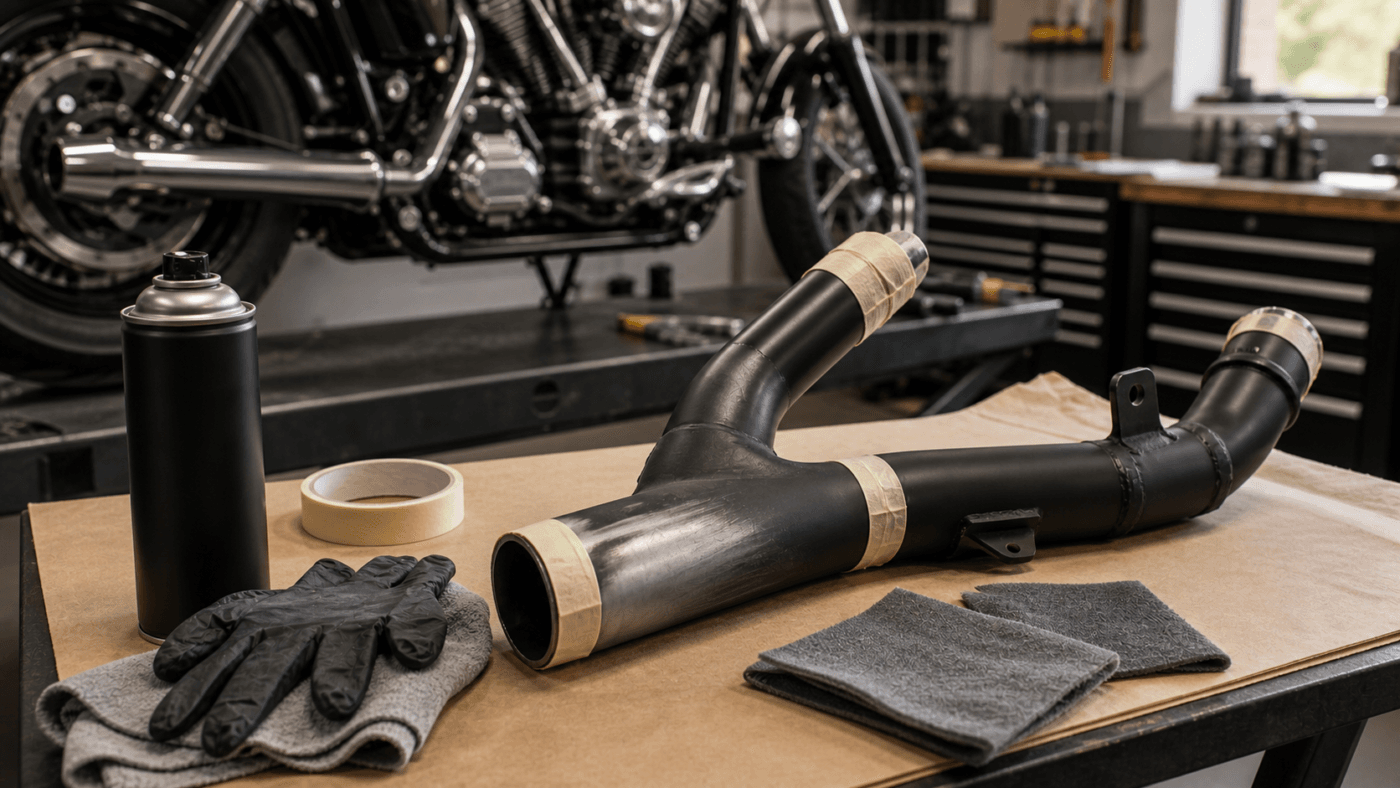
- Mask mounting surfaces, sensors and areas that should not be painted.
Bad prep is the most common reason motorcycle exhaust paint fails. Paint does not hide grease, rust or loose coating for long. For cleaning steps, use the motorcycle exhaust cleaning guide.
Painting and Curing Exhaust Paint
Apply light coats rather than one heavy coat. Heavy paint can run, cure unevenly or blister. Follow the flash time and curing instructions on the product. Many high-temperature paints need staged heat cycles: idle briefly, cool down, then run longer cycles.
Expect some smell or smoke during curing if the product instructions mention it. Do this in a ventilated area. Do not touch or wipe the paint before it has cured properly.
Motorcycle Muffler Paint
Mufflers are often easier to paint than headers because they usually run cooler. Still, they need proper cleaning and a compatible high-temperature coating. If the muffler is stainless or chrome, check whether the coating can bond to that surface after prep.
If the muffler has dents, deep rust or loose packing, paint is cosmetic only. Fix mechanical problems first.
When Not to Paint a Motorcycle Exhaust
- Do not paint over active oil leaks or burnt residue.
- Do not paint a pipe that is overheating or glowing red.
- Do not paint polished chrome without correct surface preparation.
- Do not paint sensors, gasket surfaces or slip joints that need clean fitment.
- Do not use normal spray paint on hot exhaust parts.
Paint vs Wrap vs Heat Shield
Paint changes the finish. Wrap changes heat behavior and appearance. Heat shields protect contact areas and can hide sections of pipe. These are different solutions. If the goal is rider heat protection, compare paint with the exhaust wraps vs heat shields guide.
Related Exhaust Maintenance Guides
For a full maintenance path, use the best motorcycle exhausts guide, chrome exhaust cleaning guide, why motorcycle exhausts turn yellow and how to remove bluing from exhaust pipes.
Final Recommendation
The best motorcycle exhaust paint is a high-temperature coating matched to the specific part: header, muffler, heat shield or pipe. Choose the right temperature rating, prepare the surface properly and follow the curing process. If the pipe is chrome, overheated or structurally damaged, solve that issue before painting.